
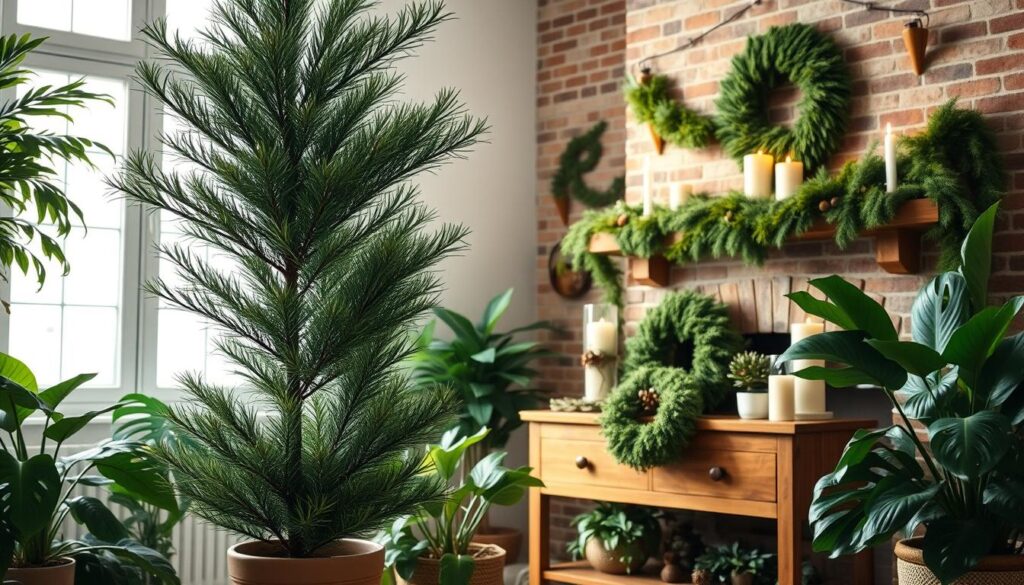
What if your home could boost your mood and quiet your mind this season? You don’t need a green thumb for it. Many of us long for nature’s touch but think it’s too hard to achieve indoors.
I’ve spent years blending design with wellness. I’ve found that even in cold months, a few smart choices can change your space. Studies show that greenery can cut stress by 37%. But, keeping things simple is just as important.
Maybe you’ve been scared to try plants because they seem hard to care for. I’ve killed my share of ferns too. But, plants like snake plants or pothos are easy to care for. Add them to simple pots, and your room will feel fresh and calm.
This isn’t about making everything perfect. It’s about creating calm spots where you want to stay. Let’s see how to mix winter charm with easy care.
Key Takeaways
- Strategic plant placement enhances both aesthetics and mental well-being
- Low-maintenance species offer beauty without demanding constant care
- Decluttered arrangements amplify the calming effects of natural elements
- Seasonal styling adapts nature’s benefits to colder indoor environments
- Functional design choices create visually cohesive living spaces
The Benefits of Winter Greenery in My Home
When I first filled my home with winter plants, I didn’t expect the big change they’d bring. They not only look great but also offer surprising benefits. These plants have become my secret weapon against winter’s cold.
Enhancing Indoor Air Quality
Last January, my snake plant became an accidental hero. I noticed less stuffiness in my bedroom. NASA studies show certain plants filter toxins like formaldehyde. Now, I keep it bedside for cleaner air while I sleep.
My favorite combo is a peace lily by the window and spider plants hanging near my reading nook. They work hard to purify the air without any fuss.
Here’s what I’ve observed in my air quality tracker:
| Plant | Air Benefits | Care Level |
|---|---|---|
| Snake Plant | Removes benzene & formaldehyde | Low maintenance |
| Peace Lily | Reduces ammonia levels | Moderate watering |
| Spider Plant | Filters xylene & carbon monoxide | Thrives in indirect light |
Boosting My Mood
During a gray week, I bought three fluffy ferns on impulse. There’s science behind feeling better! Studies show interacting with plants can lower stress hormones by up to 16%. Now, I make “plant check-ins” part of my morning routine.
My mood-boosting toolkit includes:
- Eucalyptus shower bundles for spa-like steam sessions
- A lemon tree sapling whose citrus scent energizes my workspace
- Velvety purple oxalis that makes me smile when its leaves open each morning
Creating a Cozy Atmosphere
Nothing beats reading under a blanket with twinkle lights reflecting off monstera leaves. I use trailing ivy to soften bookshelves and cluster succulents in warm-toned pots on side tables. My guests always comment on how welcoming the space feels, thanks to the indoor plant decor.
Pro tip from my trial-and-error: Mix textures! Pair spiky dracaena with round peperomia leaves near seating areas. Add cinnamon sticks to potting soil for subtle seasonal scent. It’s these little touches that turn a house into a winter sanctuary.
Choosing the Right Greenery for Winter
As winter comes, picking the right plants for my home is both an art and a science. Not all plants do well in dry air or low light. Here’s how I pick the best plants for my space during winter.
Popular Winter Indoor Plants
My favorite winter indoor plants include the ZZ plant. Its waxy leaves can survive when I forget to water. I also love Trader Joe’s $5.99 magnolia stems for a touch of warmth.
Trader Joe’s paperwhite bulbs are another hit. They bloom with fragrant white flowers just in time for holidays.
Seasonal Variations in Greenery
Some plants actually prefer the cold of winter. English ivy stays lush near drafty windows. Rosemary bushes also do well in cooler temperatures.
But, avoid tropical plants like fiddle leaf figs in winter. They drop leaves if it’s too warm.
Indoor vs. Outdoor Plants
Last year, I learned a hard lesson. I brought home a juniper shrub thinking it was for indoors. But it needed cold outdoor temperatures to live! Now, I check Trader Joe’s tags for “indoor-only” labels.
A good rule: If it’s sold with poinsettias and orchids, it’s safe for your home.
Creative Ways to Display Greenery
Winter is my favorite time to play with indoor plant styling. The right way to show off greenery can turn it into living art. I’ll share three ways to make displays stand out while keeping them practical and personal.
Stylish Planters That Tell a Story
I like to mix materials like cement planters from Terrain with thrifted finds for a unique look. My latest project was a $5 garage sale urn turned into a statement piece:
- Scrubbed and sealed chipped edges with clear wax
- Stuffed moss around the base of a snake plant
- Paired with Afloral’s woven baskets ($22-45) for texture contrast
This mix adds visual interest and hides nursery pots. A pro tip: Group 3 planters in different heights near windows.
Vertical Magic With Floating Shelves
My small-space secret is using IKEA’s LACK shelves ($14.99) as green galleries. Here’s how I style them:
- Anchor with trailing pothos on the top shelf
- Layer Afloral’s Real Touch garlands ($39) along edges
- Add miniature succulents in geometric pots
The garlands need no care – great for high spots. Rotate shelf arrangements monthly to match light changes.
Tabletop Arrangements That Wow
I make focal points using TJ’s $3.99 eucalyptus bundles:
- Fan stems in a shallow ceramic bowl
- Tuck mini LED lights underneath
- Surround with petite ZZ plants
For dining tables, I use cake stands as plant risers. The key? Keep centerpieces under 12″ tall for easy conversation.
Essential Tools for Indoor Plant Care
After years of trying different things with my indoor plant design, I found three key things: precise watering, the right soil, and balanced food. Here are the tools that made my plant care routine better.

Watering Equipment
My top tool is colored glass watering bulbs. They cost $8 and are from Amazon. They help me see if the soil is wet and look cool. I also use a copper watering can to water plants without getting leaves wet.
When I’m busy, I use self-watering planters from The Sill’s Vertical Space Bundle. They’re great for plants like pothos in boho bedroom styling. Here are three tools I really like:
| Tool | Best For | Pro Tip |
|---|---|---|
| Moisture meter | Beginners | Check soil 2″ deep |
| Mister bottle | Tropical plants | Use filtered water |
| Watering globes | Vacation care | Lasts 7-10 days |
Proper Soil Selection
My fiddle leaf fig almost died until I made this soil mix:
- 40% potting soil (FoxFarm Ocean Forest)
- 30% perlite for drainage
- 20% orchid bark chunks
- 10% worm castings
This mix stops root rot and keeps nutrients easy to get. For succulents, I add more pumice. Always choose soil that matches your plant’s natural home.
Fertilizers and Nutritional Needs
Plants need food! I switch between:
- Liquid seaweed (every 2 weeks in growth season)
- Slow-release pellets (every 3 months)
- Banana peel tea (monthly calcium boost)
Tip: Use half the amount of fertilizer for ferns. If the soil looks crusty, it’s time to change it.
Tips for Maintaining Winter Plants
Last winter, I almost lost my favorite magnolia stem because I missed a key step. Now, I keep a plant health checklist in my gardening toolbox. It has changed how I care for my winter plants. Here are some tips to help your plants stay healthy during the cold months.
Regular Watering Schedules
Winter plants need less water, but they need it regularly. I water my snake plant every 3 weeks and my ferns weekly. I use my knuckle to check the moisture level. My trick is to use floral foam in planter bowls to control water absorption, which is great for cut stems like eucalyptus.
Identifying Signs of Stress
My magnolia disaster taught me to watch for signs of trouble early. Here are some warning signs:
- Yellowing leaves at the base (usually overwatering)
- Crispy brown edges (low humidity)
- Drooping stems that don’t perk up after watering
When my calathea started curling, I used a simple trick. I put pebble trays under the plants with a half-inch of water. It’s cheaper than a humidifier and fits right in with winter decor!
Seasonal Pruning Techniques
January is my favorite month for pruning. Use clean shears to:
- Remove dead or yellowed leaves
- Trim leggy growth above leaf nodes
- Shape plants for balanced light exposure
That sad magnolia stem? After pruning and using a pebble tray, it grew three new branches by Valentine’s Day. Remember, winter pruning sets the stage for spring growth.
Incorporating Textures and Colors
Winter greenery becomes magical with contrasting textures and colors. Mixing rough and smooth elements adds depth. Pops of color keep spaces lively, even on gloomy days. Here’s how I make my home a winter wonderland.

Mixing Different Leaf Shapes
I pair spiky cedar fronds with round eucalyptus leaves for drama. Try these combinations:
| Plant | Texture | Best Paired With |
|---|---|---|
| Rubber Tree | Glossy | Fuzzy Lamb’s Ear |
| Fern | Feathery | Waxy Snake Plant |
| Pine Branches | Prickly | Velvety African Violet |
Adding Colorful Accents with Decor
My favorite trick is placing burgundy rubber trees next to white pinecones. For under $10, you can add vibrant touches:
- Ceramic vases in icy blue tones
- Mustard-yellow throw pillows
- Metallic gold candle holders
Using Natural Elements like Stones
Smooth river rocks are perfect for plant toppers. They retain moisture and look chic. When decorating with natural elements, I follow this simple formula:
- Choose 3 complementary textures (wood, stone, moss)
- Arrange in odd-numbered groups
- Add one metallic accent piece
DIY Greenery Projects
Winter is my favorite time to get crafty with plants. Simple DIY projects add personality and refresh decor without spending much. Here are three projects that mix seasonal charm with indoor plant inspiration.
Creating a Terrarium
Last week, I turned an old urn into a mini woodland scene. Here’s how:
- Layer pebbles, activated charcoal, and potting soil
- Add TJ’s juniper clippings (they stay fresh for weeks!)
- Tuck in moss and decorative stones
The whole project took 10 minutes. Pro tip: Mist lightly every 10 days – overwatering is the #1 terrarium killer.
Making a Winter Wreath
I upgraded my wreath with foraged pine branches and eucalyptus. For texture, I added cinnamon sticks and dried oranges from World Market ($6 pack). Secure everything with floral wire, then finish with a velvet ribbon. Hang it indoors to avoid frost damage.
Building a Centerpiece with Greenery
My coffee table got a glow-up with leftover juniper trimmings and a shallow bowl. I arranged the greens asymmetrically, added pinecones, and nestled in tea lights. For height, I stuck bare birch branches in the center. Rotate the candles weekly to keep the arrangement looking fresh.
What I love about these projects? They let me experiment with different textures while keeping that cozy winter vibe. Plus, swapping elements seasonally gives me endless indoor plant inspiration without starting from scratch.
Layering Greenery for Depth
When I revamped my living room last winter, I found out how layering plants can turn a flat area into a lively jungle. Mixing different heights, textures, and colors adds visual interest. This makes every spot feel alive and inviting.
Combining Tall and Short Plants
My 6-foot fiddle leaf fig was the centerpiece, pulling the eye up. Short plants like snake plants filled in the lower spots. I also hung trailing pothos on bookshelves to add a soft touch. This trick works great in small spaces too.
| Tall Plant | Medium Plant | Trailing Plant |
|---|---|---|
| Fiddle Leaf Fig | ZZ Plant | String of Pearls |
| Bird of Paradise | Peperomia | Philodendron |
Creating a Focal Point
Over my fireplace, I layered eucalyptus garlands with dried pheasant feathers for winter flair. The key is to start with a big piece (like a statement wreath). Then, add smaller items at an angle. This creates a flow that draws the eye without overwhelming the area.
Balancing Different Shades of Green
I started treating leaf colors like paint swatches. My dark green rubber plant grounds bright spots. Variegated spider plants add lightness to darker corners. For a holiday touch, I added silver-dusted sage sprigs among the greens. Instant festive flair!
“Layering isn’t just stacking – it’s choreographing how the eye dances through a space.”
Seasonal Decor Ideas with Greenery
Winter is my favorite time to refresh my home with natural elements. These elements bring warmth and life indoors. Greenery adds a magical touch to winter home decor. I’ll share my styling tricks, from bold holiday statements to understated elegance.
Festive Arrangements for Holidays
Last year, I made a viral holiday mantelpiece. I used two faux garlands, magnolia branches, and $6 eucalyptus bundles from Trader Joe’s. Start with the garlands for volume, then add magnolia leaves for texture. Finish with eucalyptus sprigs cascading down—it’s like bringing a snowy forest inside!
Don’t have Trader Joe’s nearby? Use backyard clippings like pine branches or holly. I paired mine with Dollar Tree gold bells for a festive pop. Pro tip: Use floral wire to attach ornaments directly to stems—it’s cheaper than pre-decorated garlands.
Minimalist Winter Decorations
Less is more for a calm winter space. I place single-stemmed eucalyptus in slim vases along windowsills. The silvery-green leaves catch sunlight beautifully without overwhelming small rooms. For tabletops, try grouping three matching pots with snake plants—their vertical shape adds height without clutter.
“Winter whispers through simple arrangements. Let the greenery speak for itself.”
Creative Uses for Pine Cones and Boughs
Those pine cones from your morning walk? Bake them at 200°F for 30 minutes to remove sap, then spray-paint them white or gold. Scatter them around candle holders or glue them to a foam wreath base. Fresh boughs also make stunning table runners—just lay them down the center and add tea lights!
- Dip pine cones in faux snow for a frosted look
- Weave boughs through stair railings
- Fill clear bowls with pine cones and cinnamon sticks
Working with Space Limitations
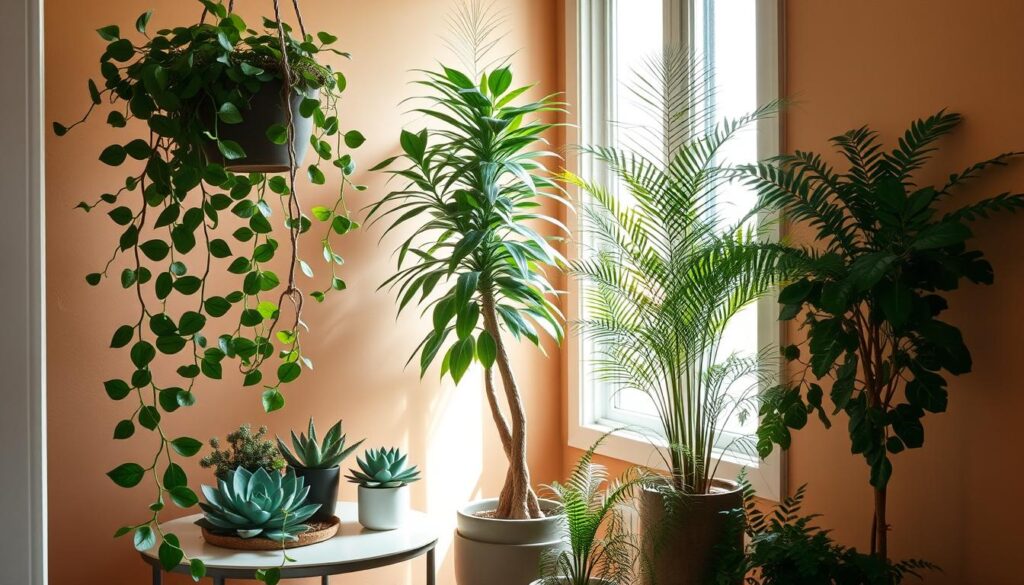
Even the smallest rooms can be filled with greenery with the right indoor plant styling. I once lived in a 500-square-foot apartment. I learned to use every inch while keeping it airy and green. Here are my top tips for small spaces, including a clever mirror trick and affordable plants that do well in tight spots.
Best Greenery for Small Spaces
Compact plants are key. My favorites include:
- Snake plants: They grow vertically and thrive in low light
- Air plants: The Sill’s $45 Tillandsia sets need no soil
- Pothos: It trails beautifully from shelves without taking up too much space
| Plant | Size | Light Needs | Care Level |
|---|---|---|---|
| Snake Plant | 2-4 ft tall | Low | Easy |
| Air Plants | 3-6 inches | Bright indirect | Moderate |
| ZZ Plant | 1-3 ft | Low to medium | Easy |
Vertical Gardening Ideas
Go up! I hung propagation stations above my desk. This trick saved space and added beauty. Try these ideas:
- Macramé planters for trailing vines
- Wall-mounted magnetic pots for herbs
- Floating shelves with staggered succulents
Creating Illusions of More Space
Mirrors aren’t just for checking your outfit. A mirror behind my fiddle-leaf fig made my studio feel bigger. Here are more smart tricks:
- Use light-colored pots to reflect light
- Cluster plants in odd numbers for depth
- Choose transparent glass terrariums
Last winter, I turned my narrow balcony into a mini-jungle. My indoor plant styling made it cozy, not cramped.
Safe Indoor Plants for Pets
When my curious cat nibbled on my monstera last winter, I realized how easily our leafy companions can become hidden hazards. Balancing cozy indoor plants with pet safety isn’t just about aesthetics—it’s about creating a worry-free space where both greenery and furry friends thrive.
Understanding Toxic vs. Non-Toxic Plants
Many popular houseplants, like lilies and philodendrons, contain compounds that can harm pets. After my monstera scare, I cross-referenced every plant in my home with the ASPCA’s toxic plant database. Common offenders include:
- Peace lilies (causes mouth irritation)
- Snake plants (mildly toxic to cats)
- Pothos (triggers vomiting)
Non-toxic alternatives often have softer leaves and less tempting textures. Look for plants labeled explicitly as pet-safe—when in doubt, I snap a photo and ask my vet.
Recommended Pet-Friendly Options
My go-to cozy indoor plants now include these ASPCA-approved varieties:
- Spider plants: Thrives in low light, safe for curious nibblers
- Boston ferns: Adds lush texture without toxicity risks
- Parlor palms: Pet-safe tropical vibes for tabletops
For those wanting zero risk, high-quality faux plants like the ZZ plant replica from Bloomscape offer realistic greenery. When shopping artificial options, I look for UV-resistant materials and natural-looking color variations—they blend seamlessly with live plants.
My Personal Styling Inspiration
My winter greenery journey began with an asymmetrical mirror garland design I found online. It became the heart of my living room makeover. I mixed light reflections with trailing pothos and snake plants. This blend of organic shapes and metallic accents made a space that’s both lively and soothing.
How I Transformed My Living Room
I decorated my fireplace with TJ’s fresh eucalyptus stems in vintage planters from Facebook Marketplace. A dried floral bundle from Etsy added texture above the mantel, keeping the room bright. I layered heights with tall fiddle-leaf figs and low succulents on reclaimed wood shelves.
My Favorite Sources for Greenery
Trader Joe’s is my go-to for affordable stems like juniper and cedar. Facebook Marketplace has unique planters, like a 1970s macramé hanger for my spider plant. For special touches, Etsy sellers like DriedDecorCo offer preserved moss accents that do well in low light.
Styles I Love to Explore
I’m planning a living wall with The Sill’s modular moss panels. I’m also trying air plants in geometric terrariums and IKEA’s self-watering pots for when I’m busy. My style is a mix of Scandinavian minimalism and urban jungle.
Now it’s your turn: What winter greenery project excites you? Share your ideas with #WinterIndoorGreenery. Every space can be a canvas for nature’s beauty, including that odd corner by the radiator.