
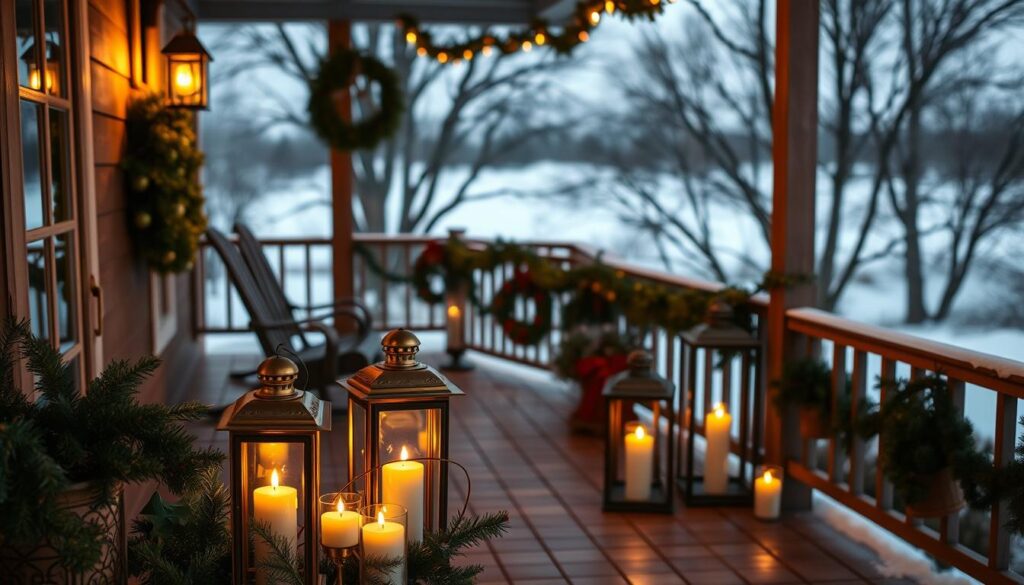
Imagine your front entry glowing with holiday magic in one night. After 15 winters in Michigan, I’ve found lanterns are more than lights. They tell stories. Let me show you how to welcome neighbors and loved ones with warmth.
Imagine snowflakes on your steps with soft light from carefully arranged lanterns. It’s not about pricey items. It’s about where you place them and adding seasonal touches. I learned three key tricks that work even in freezing weather.
This guide will share my top tips for a welcoming glow all December. You’ll learn to mix lantern sizes for interest, pick weather-proof materials, and layer textures without clutter. The best part? You can do it all with things you probably have already.
Key Takeaways
- Strategic lantern placement enhances curb appeal instantly
- Mix heights and textures for professional-looking arrangements
- Use battery-operated candles for safety in snowy conditions
- Incorporate natural elements like pinecones for rustic charm
- Choose durable materials that withstand winter weather
Why I Love Using Lanterns for Christmas Decor
Lanterns make my Christmas porch feel magical, even on the darkest nights. They add depth and texture to outdoor holiday decor. Plus, they create pockets of warmth that invite people in. Here’s why they’re my favorite for adding seasonal charm.
The Warmth of Flickering Light
I use battery-operated candles from Crate & Barrel to mimic real flames safely. Their soft glow brightens up gray winter evenings. It casts dancing shadows that feel nostalgic.
Red accents, like cranberry-filled votives or crimson ribbons, add a cheerful touch against snowy landscapes.
Last year, a neighbor said my lantern-lit walkway reminded her of childhood Christmases. Flickering light has the power to brighten spaces and touch emotions.
Creating a Welcoming Atmosphere
Guests always pause at my front steps when they see the lanterns. I arrange three different heights together. This creates a welcoming atmosphere before anyone even rings the bell.
To add coziness, I put pinecones and cinnamon sticks inside some lanterns. The scent mixes with the visual warmth, making the porch feel like a hug. It’s amazing how something simple can transform a cold entryway into a holiday highlight.
Choosing the Right Lanterns
Your porch lanterns should say “welcome” to guests. Here’s how to pick pieces that are both charming and practical. I’ve learned through trial and error that getting this right changes your entire holiday setup. Let’s look at what’s most important.
Size and Scale Considerations
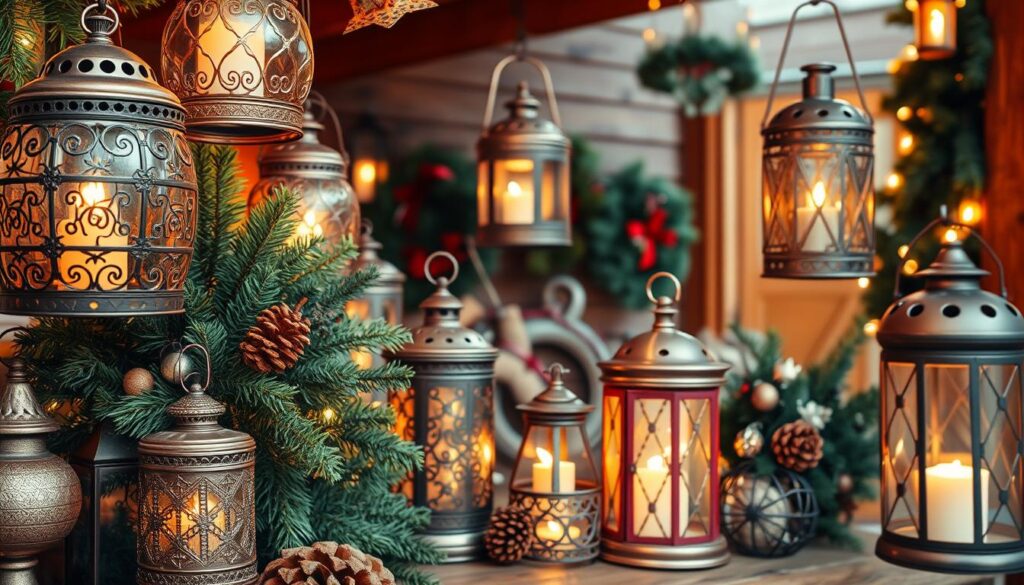
Start by measuring your porch. My cottage entryway was cluttered last year because I used big lanterns that blocked the door. Now, I make sure to leave at least 12 inches of space around each piece. For smaller porches, 14″-tall lanterns are best. Larger spaces? Use 24″ models on either side of the stairs.
Different Styles to Match Your Aesthetic
Rustic Christmas decorations shine when lanterns match your home’s style. Here’s how I choose:
- Modern Farmhouse: Black metal lanterns from Pinterest trends, paired with birchwood accents
- Traditional Charm: Distressed wooden boxes or galvanized steel with plaid ribbons
- Upcycled Magic: Old mason jars wrapped in burlap, filled with LED fairy lights
I recently upcycled vintage milk cans into lanterns—they add a nostalgic touch without costing much. Remember: mix textures like iron and woven rattan for depth, but keep colors the same. Cranberry-red bows on neutral lanterns? Always a hit.
Best Materials for Outdoor Lanterns
Choosing the right materials for your front entryway lanterns is key. It’s not just about looks; it’s about durability. Midwest winters are tough, and your lanterns need to be ready.
Metal vs. Glass: Which Holds Up Best?
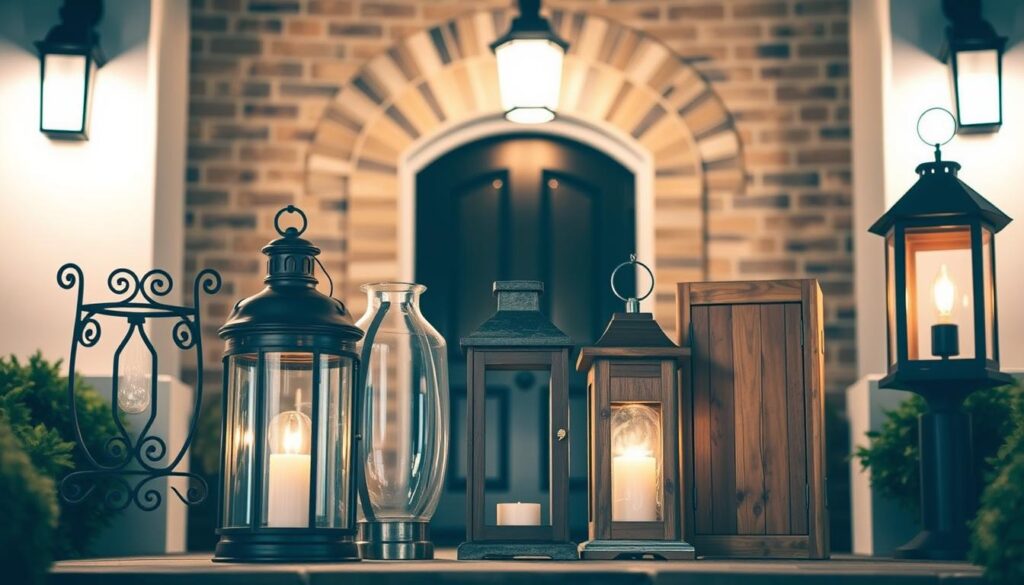
My Crosby Natural Teak Lantern taught me a lot. Glass lanterns look great but can fog up in cold weather. On the other hand, metal lanterns, like those from Hampton Bay, stay looking good all season.
| Material | Best For | Pros | Cons |
|---|---|---|---|
| Metal | High-traffic areas | Wind-resistant, minimal maintenance | Can dent if impacted |
| Glass | Decorative accents | Classic light diffusion | Prone to cracking in freeze-thaw cycles |
| Teak | Natural aesthetics | Develops protective patina over time | Requires annual oiling |
Weather Warrior Materials That Last
After three Chicago winters, I’ve found the best materials:
- Powder-coated aluminum: Resists corrosion better than standard metals
- Marine-grade teak: Naturally repels water without chemical treatments
- Double-walled resin: Mimics glass but won’t shatter in cold snaps
Pro tip: Always check for drainage holes at the base. My teak lantern has hidden vents to prevent water damage. For glass fans, battery-operated candles are a good choice to avoid moisture problems.
How to Arrange Lanterns on Your Porch
Turning your porch into a festive scene begins with careful lantern placement. I’ve learned that mixing grouping and spacing adds depth and highlights each lantern. Here are my top tips for creating a display that’s both cohesive and lively.
Grouping vs. Spacing: My Preferred Layout
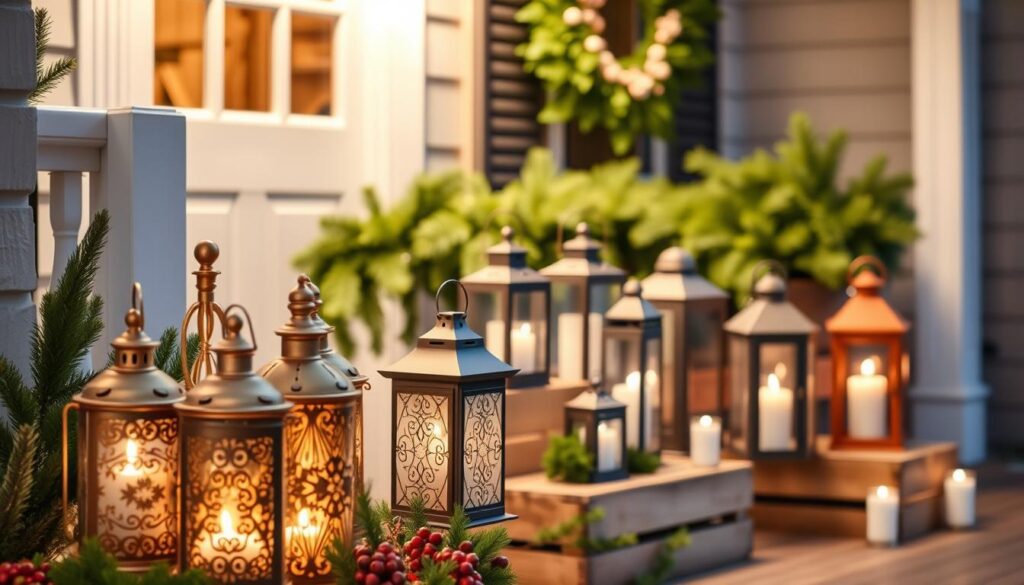
Grouping lanterns in odd numbers, like the rule of three, boosts visual appeal. Place a 15″ lantern next to two 28″ ones near your door or planter. This size mix creates movement and looks intentional. For wider porches, space clusters 4-6 feet apart to guide the eye.
Adding textured elements brings extra charm:
- Flank a rustic wooden bench with matching metal lanterns
- Nestle a trio between potted evergreens and pinecone fillers
- Anchor symmetrical pairs beside holiday wreaths
Height Variations for Visual Interest
Using different heights prevents flat arrangements. Here’s a simple stacking formula:
- Place tallest piece (28-36″) near focal points like columns
- Use mid-sized options (18-24″) on stairs or railings
- Dot small lanterns (12-15″) around seating areas
Elevate short lanterns with upside-down galvanized buckets or vintage crates. This trick adds depth without buying new items. For railings, hang lanterns at different chain lengths for cascading light.
Adding Seasonal Touches to Lanterns
Turning simple lanterns into holiday wonders is easy and fun. With a few easy steps, you can make your porch look festive and welcoming. Here are my top tips for decorating lanterns for Christmas, including some lessons I learned the hard way!
Using Greenery and Ribbons
Last year, I used fresh magnolia leaves to decorate lantern handles. I wrapped them around the metal with floral wire – no glue needed! For a fuller look, layer pine branches with eucalyptus. Remember, if you add pinecones, use wire to secure them. I learned the hard way that hot glue doesn’t always stick!
Ribbons bring instant joy. I switch between:
- Plaid velvet for a traditional look
- Shimmering gold for a modern feel
- Burlap strips for a rustic touch
Incorporating Ornaments and Holly
Fill lantern bases with unbreakable ornaments in matching colors. I love using mixed metallic balls for their sparkle. For outdoor displays, add holly sprigs for a classic touch. Just keep in mind:
| Material | Best Use | Durability |
|---|---|---|
| Plastic ornaments | Windy areas | 4+ seasons |
| Fresh holly | Protected porches | 2-3 weeks |
| Faux berries | High-traffic zones | Indefinite |
My biggest lesson? Pinecones are better as table decor than on lanterns. After a hot-glue mishap, I now use them in contained arrangements. For a quick change, swap ribbon colors from Christmas to New Year’s – crimson to gold is a great choice!
Lantern Lighting Options
Finding the right lighting for your winter outdoor lanterns is key to a festive porch. I’ve tried everything from candles to high-tech lights. Here’s what I found works best for a magical glow without losing practicality.
Battery-Operated vs. Electric Lanterns
Battery-powered lanterns are my top choice for easy setup. Lithium batteries last longer in cold weather, which is great for December. Last year, my alkaline lanterns lasted 12 hours, but lithium kept going for over 35 hours. The downside is lithium batteries are almost twice as expensive.
Electric lanterns run forever but need an outlet outside. I use Crate & Barrel’s timer-enabled wreath plugs for coordinated lighting. But be careful not to overload your circuit – I once blew a breaker with six lanterns on one cord!
Solar Lanterns for Energy Efficiency
Solar lanterns are good for those who care about the environment. But, winter sun can be hit-or-miss. My solar lanterns worked great in November but barely lit up in December’s cloudy days. They’re best for:
- Sunny climates
- Early-season displays
- Using with battery backups
| Features | Battery | Electric | Solar |
|---|---|---|---|
| Power Source | Replaceable batteries | Wall outlet | Sunlight + battery |
| Runtime | 12-40 hours | Unlimited | 2-8 hours |
| Weather Resistance | Excellent | Good (if covered) | Varies |
| Best For | Remote placements | Permanent fixtures | Daytime charging areas |
To ensure worry-free winter nights, I mix battery and electric lights. Solar lights are a bonus but shouldn’t be your main choice unless you live in a sunny place like Arizona or Florida!
Safety Tips for Lantern Use
Nothing ruins holiday curb appeal faster than a lantern mishap. While creating that warm, inviting glow on your porch, safety should always come first. I’ve learned this the hard way—like the time a neighbor’s ladder broke while adjusting their lantern display. Let’s avoid those headaches with these practical tips.
Fire Safety Guidelines
Battery-operated lights are your best friend—they’re safer than candles. After a close call with a tipped candle during a family gathering, I switched to flameless options. If you must use real candles, keep them far from greenery, ribbons, and other flammable decor. Always place lanterns on stable surfaces, and never leave them unattended.
One homeowner shared how their metal lantern’s heat nearly melted nearby plastic ornaments. That’s why I recommend checking manufacturer guidelines for heat limits. For more detailed advice, explore these safety tips for paper lanterns to keep your display worry-free.
Securing Lanterns in Windy Conditions
Winter storms can turn lanterns into projectiles. During a blizzard last year, my lightweight lanterns nearly toppled over—until I switched to weighted bases. Here’s what works best:
- Concrete-filled pots: Inexpensive and sturdy, they anchor tall lanterns
- Ground stakes: Ideal for lining walkways without risking tip-overs
- Sandbags: Perfect for temporary setups on wooden decks
A friend’s stake system saved their entire display when 50mph winds hit unexpectedly. Test your setup by gently shaking lanterns—if they wobble, reinforce their base. Your holiday curb appeal should shine bright, not become a neighborhood cautionary tale!
Eco-Friendly Lantern Alternatives
Decorating sustainably doesn’t mean you have to give up charm. I’ve found creative ways to mix environmental care with festive fun. You can reuse household items or upgrade your lighting. These eco-friendly swaps make a big difference without creating waste.
Sustainable Material Choices
Bamboo and reclaimed wood lanterns are my top picks for rustic holiday decor. These materials look great outdoors and match well with natural items like pinecones or burlap ribbons. For something more modern, try lanterns from recycled metal or glass.
One DIY project I love is turning old canning jars into beautiful centerpieces. Here’s how:
- Clean and remove labels from jars
- Wrap jute twine around the neck
- Add LED tea lights and seasonal greenery
Over 12,000 people on Pinterest have shared their own versions of this idea. It shows that being eco-friendly can spark lots of creativity!
Using LED Lights to Save Energy
Last December, I cut my holiday energy use by 75% by using LED candles. Crate & Barrel’s flicker-effect LEDs worked great, lasting over 200 hours on one set of batteries. Here’s how different options compare:
| Type | Cost/Year | Lifespan | Weather Resistance |
|---|---|---|---|
| Battery LED | $3.50 | 300 hours | High |
| Electric LED | $1.20 | 50,000 hours | Indoor use only |
| Solar LED | $0 | Varies by sunlight | Moderate |
For permanent setups, I use solar-powered LED strings. They light up automatically at dusk. They’re great for walkways or porch railings – no need for extension cords!
Personal Touches for Your Porch Display
Your front porch lanterns become more than decorations when infused with personality. These finishing details transform generic holiday curb appeal into a display that feels uniquely yours. I’ve found blending DIY creativity with family rituals creates a warm, inviting space guests remember long after the season ends.
Customizing Lanterns With DIY Crafts
Weatherproof vinyl wraps let me refresh lanterns yearly without replacing them. Last Christmas, I designed snowflake-patterned sleeves using Cricut’s outdoor-grade vinyl. Measure your lantern’s dimensions, cut the vinyl to size, and secure it with removable adhesive dots. Add monograms, festive shapes, or even silhouettes of pets for instant holiday curb appeal. Battery-operated fairy lights behind the designs cast intriguing shadows after dark.
Family Traditions in Lantern Decor
Every December, my kids glue cinnamon sticks and dried orange slices to miniature lanterns—a tradition started when my son Charlie insisted his Santa photo needed “smelly Christmas lights.” We display these handmade pieces alongside our main lanterns. Incorporate your family’s story by tucking handwritten holiday recipes inside jars or dangling childhood ornaments from lantern handles. These touches spark conversations and create visual layers that store-bought decor can’t match.
Whether crafting custom wraps or weaving memories into your setup, intentional details elevate porch lanterns from pretty to meaningful. Start small—a single personalized piece often inspires an entire display. What story will your lanterns tell this year?